Docker vs Virtual Machine: The Real Trade-off Behind the Hype
Docker and VMs solve different problems, not the same problem faster. Here's the actual trade-off — isolation boundary vs. shared-kernel overhead — and how to pick based on your constraint, not a hype cycle.
Docker vs Virtual Machine: The Real Trade-off Behind the Hype
TL;DR: Docker containers share the host kernel; VMs virtualize an entire machine, including its own kernel. That single architectural difference is the whole story — everything people cite about "Docker is faster" or "VMs are safer" follows directly from it. There is no universally "better" option, only the right isolation boundary for your specific constraint.
1. The Architectural Difference, Not the Marketing Difference
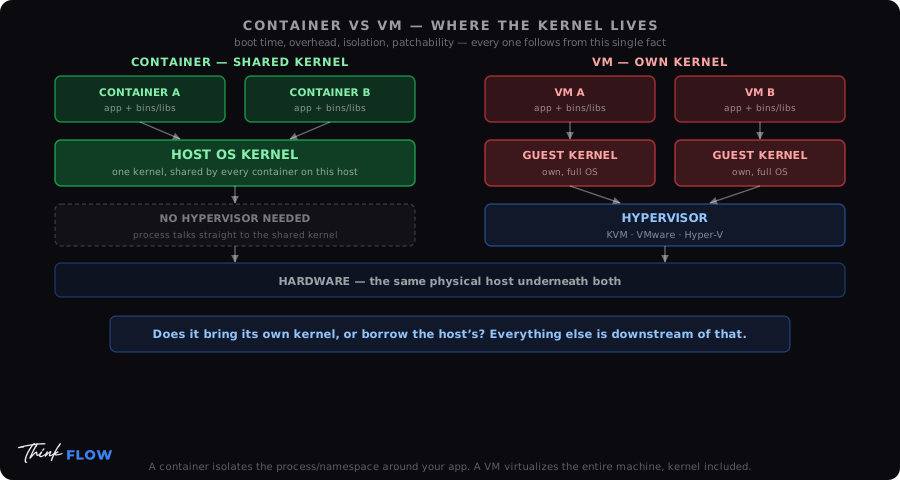
A virtual machine runs its own full operating system on top of a hypervisor (VMware, KVM, Hyper-V) — its own kernel, its own device drivers, its own everything. A container shares the host machine's kernel and isolates only the process, filesystem, and network namespace around your application.
That's the entire distinction. Every practical consequence — boot time, resource overhead, isolation strength, patchability — is downstream of "does this thing bring its own kernel or borrow the host's."
Why this matters more now: as AI inference workloads push toward larger models and higher iteration counts, the cost of standing up an environment for every training run or every scaled replica gets paid far more often than it used to. A shared-kernel container avoids re-booting an OS on every spin-up; a VM re-does that work every time, because isolation at that level requires it.
2. What Actually Differs, and Why
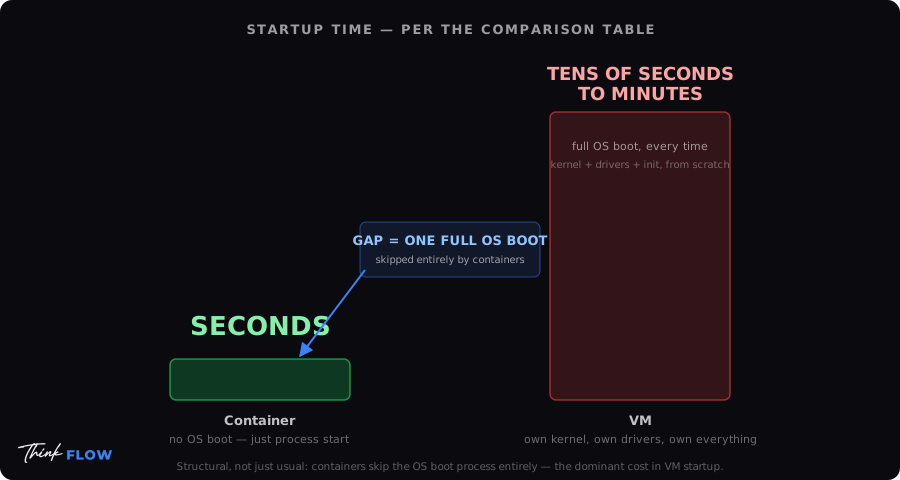
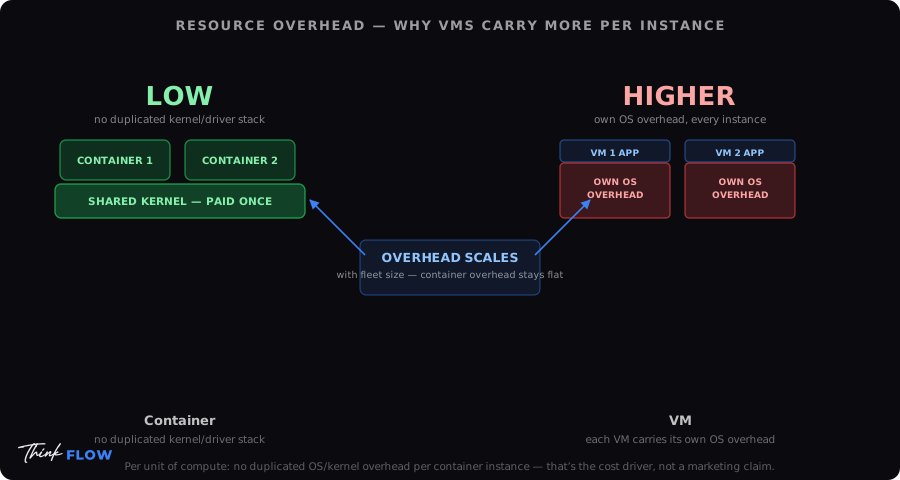
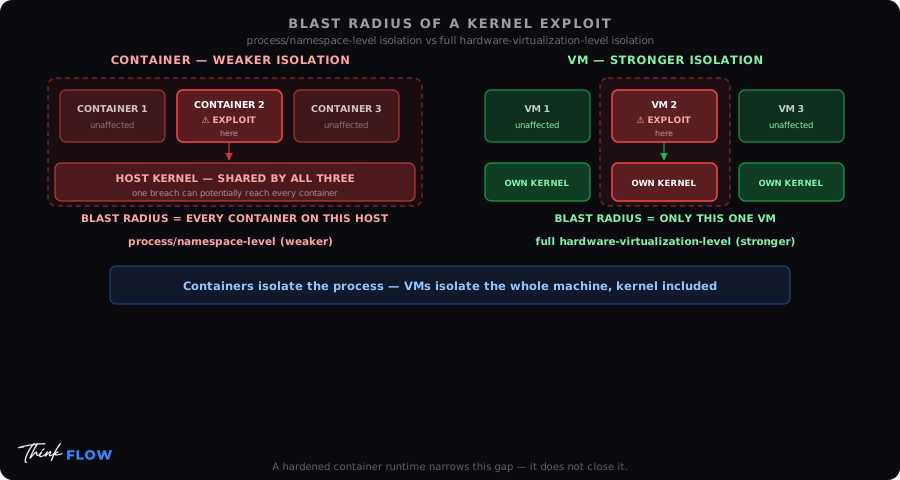
| Dimension | Container (shared kernel) | VM (own kernel) | | :--- | :--- | :--- | | Startup | Seconds — no OS boot, just process start | Tens of seconds to minutes — full OS boot | | Resource overhead | Low — no duplicated kernel/driver stack | Higher — each VM carries its own OS overhead | | Isolation boundary | Process/namespace-level (weaker) | Full hardware-virtualization-level (stronger) | | Blast radius of a kernel exploit | Can potentially affect the host kernel all containers share | Contained to that one VM's own kernel | | Best fit | Many short-lived, trusted, homogeneous workloads | Fewer long-lived, less-trusted, or heterogeneous workloads |
The isolation line is the one that actually matters for a security or multi-tenancy decision, not the boot-time line. Containers are faster precisely because they share more with the host — which is also exactly why they isolate less. You cannot get the VM's isolation guarantee with the container's shared-kernel speed; that trade isn't available, no matter how the tooling is marketed.
3. How to Actually Choose
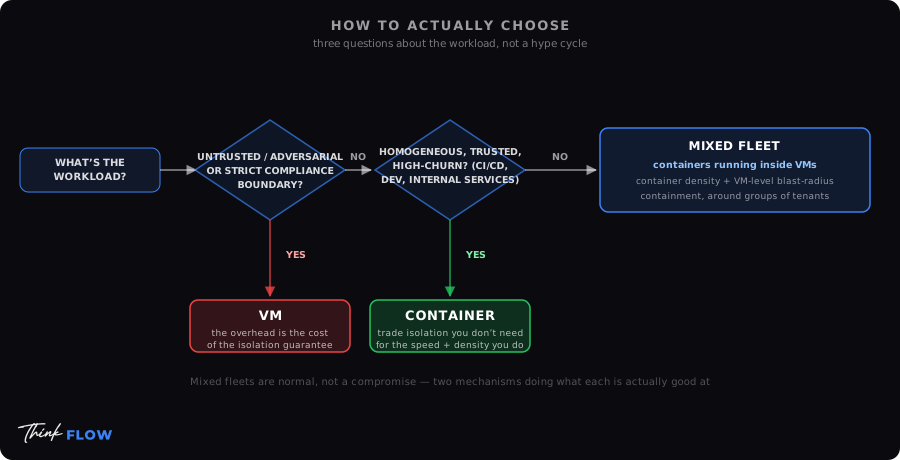
- Untrusted or adversarial workloads, strict compliance boundaries, or "this must never touch the host kernel" requirements → VM. The overhead is the cost of the guarantee.
- Homogeneous internal services, CI/CD runners, dev environments, high-churn deployments → container. You're trading isolation strength you don't need for speed and density you do need.
- Mixed fleets are normal, not a compromise: many production setups run containers inside VMs specifically to get container-level density with VM-level blast-radius containment around groups of tenants. That combination isn't contradictory — it's the two mechanisms doing what each is actually good at.
FAQ
-
Is Docker always faster to start than a VM? Yes, structurally — containers skip the OS boot process entirely, which is the dominant cost in VM startup.
-
Does that mean containers are always cheaper to run? Usually, per unit of compute, because there's no duplicated OS/kernel overhead per instance — but "cheaper" isn't the same question as "appropriate for your isolation requirement."
-
Can I run both in the same infrastructure? Yes — containers-inside-VMs is a common, deliberate pattern, not a fallback.
-
Which one is more secure? Neither is "more secure" in the abstract. A VM gives a stronger default isolation boundary against a hostile workload; a properly hardened container runtime narrows but does not eliminate the gap.
Content generated with AI assistance and reviewed by Daniel Burcea.
Affiliate Disclosure
Some links in this article are affiliate links. If you make a purchase through them, we may receive a commission at no extra cost to you. See our full disclosure.
Daniel Burcea
AI Systems Architect. Building private AI infrastructure since 2025.Read more →