Next.js 16 + FastAPI + Supabase Auth: Production-Ready AI App Template
Full-stack template: Next.js 16 App Router, FastAPI backend, Supabase Auth + pgvector. Type-safe, edge-ready, with AI agent integration.
Next.js 16 + FastAPI + Supabase Auth: Production-Ready AI App Template
Most "AI app starters" pick one side of the stack and leave the other to a tutorial's worth of hand-waving — a Next.js template with a stubbed-out /api/chat route, or a FastAPI backend with no real auth story past a hardcoded token. Neither survives contact with an actual user base. This is the split that does: Vercel-deployed Next.js 16 for the frontend and edge auth, FastAPI for the AI workload, and Supabase underneath both as auth provider, Postgres database, and vector store in one.
Architecture
Three pieces, each doing the one job it's actually good at.
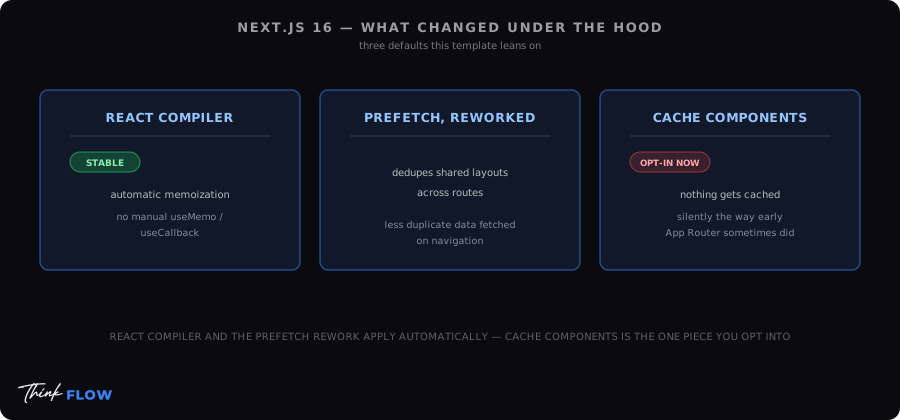
Next.js 16 App Router handles routing, server rendering, and the edge middleware that checks whether a request is authenticated before it ever reaches a page. Next.js 16 ships the React Compiler as stable (automatic memoization, no manual useMemo/useCallback), a reworked prefetch system that dedupes shared layouts across routes, and Cache Components — caching is opt-in now, so nothing gets silently cached the way early App Router versions sometimes did.
FastAPI owns everything that isn't request/response web serving: embedding generation, similarity search against the vector store, calls out to whichever LLM provider the app uses, and any background job that runs longer than a serverless function's patience allows. It's a plain REST service with no awareness of Next.js at all.
Supabase is the part that keeps this from turning into three separate vendor dashboards. One Postgres instance is the application database, the auth provider (email/password, OAuth, magic links), and — via the pgvector extension, included on every plan including free — the vector store FastAPI queries for retrieval.
Browser
   │
   ▼
Next.js 16 (Vercel)  ── edge middleware validates session
   │  Server Action, forwards Supabase JWT
   ▼
FastAPI backend      ── verifies JWT, runs embeddings/retrieval/LLM call
   │
   ▼
Supabase Postgres    ── auth.users · app tables · pgvector embeddings
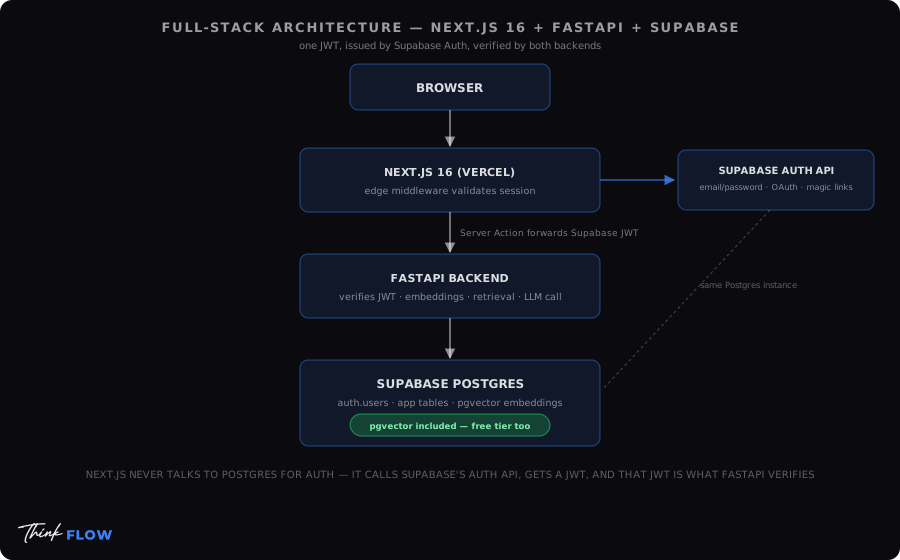
The Next.js app never talks to Postgres directly for anything auth-related — it talks to Supabase's Auth API, gets a JWT, and that same JWT is what FastAPI verifies before doing any work. One identity, two backends.
Authentication: Supabase Auth with Next.js Middleware
Supabase's @supabase/ssr package is the current, supported way to wire this up — the older auth-helpers package is in maintenance mode only. The pattern has three parts: a browser client, a server client, and middleware that refreshes the session on every request since Server Components can't write cookies themselves.
// lib/supabase/middleware.ts
import { createServerClient } from '@supabase/ssr'
import { NextResponse, type NextRequest } from 'next/server'

export async function updateSession(request: NextRequest) {
  let response = NextResponse.next({ request })

  const supabase = createServerClient(
    process.env.NEXT_PUBLIC_SUPABASE_URL!,
    process.env.NEXT_PUBLIC_SUPABASE_ANON_KEY!,
    {
      cookies: {
        getAll() {
          return request.cookies.getAll()
        },
        setAll(cookiesToSet) {
          cookiesToSet.forEach(({ name, value }) => request.cookies.set(name, value))
          response = NextResponse.next({ request })
          cookiesToSet.forEach(({ name, value, options }) =>
            response.cookies.set(name, value, options),
          )
        },
      },
    },
  )

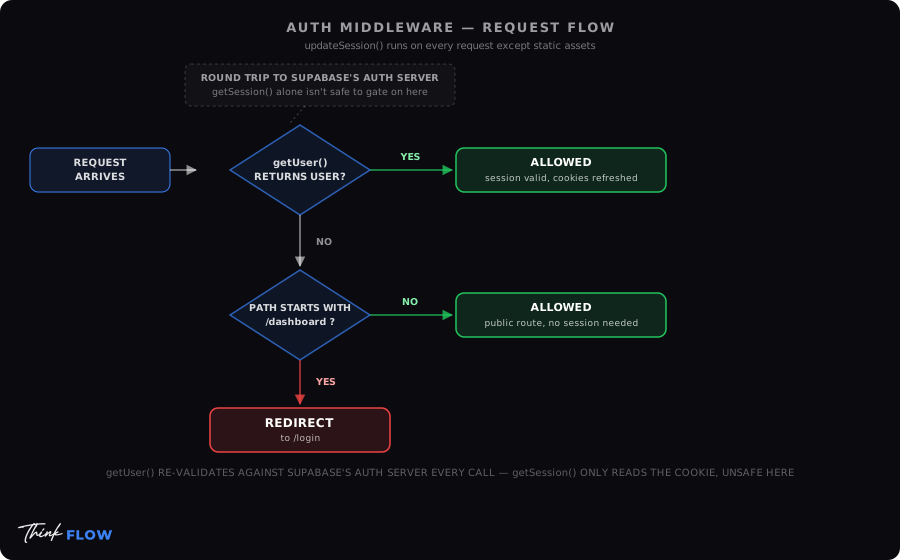
  // getUser() re-validates against Supabase's Auth server every call.
  // getSession() only reads the local cookie and cannot be trusted in middleware.
  const { data: { user } } = await supabase.auth.getUser()

  if (!user && request.nextUrl.pathname.startsWith('/dashboard')) {
    const url = request.nextUrl.clone()
    url.pathname = '/login'
    return NextResponse.redirect(url)
  }

  return response
}
// middleware.ts
import { type NextRequest } from 'next/server'
import { updateSession } from '@/lib/supabase/middleware'

export async function middleware(request: NextRequest) {
  return await updateSession(request)
}

export const config = {
  matcher: ['/((?!_next/static|_next/image|favicon.ico|.*\\.(?:svg|png|jpg|jpeg|webp)$).*)'],
}
That last point matters more than it looks: getSession() reads whatever the cookie says without checking it's still valid, and middleware is exactly the place where trusting a stale cookie lets an expired or revoked session through. getUser() costs one round trip to Supabase's Auth server but is the only one of the two that's actually safe to gate routes on.
Template Repository
The full starter — this middleware, both Supabase clients, the FastAPI service, and a working chat route wired end to end — is available as a GitHub template repo. Request early access to the template and we'll send it to you: get in touch.
The Rest of the Code
Supabase client for Server Components and Server Actions:
// lib/supabase/server.ts
import { createServerClient } from '@supabase/ssr'
import { cookies } from 'next/headers'

export async function createClient() {
  const cookieStore = await cookies()

  return createServerClient(
    process.env.NEXT_PUBLIC_SUPABASE_URL!,
    process.env.NEXT_PUBLIC_SUPABASE_ANON_KEY!,
    {
      cookies: {
        getAll() {
          return cookieStore.getAll()
        },
        setAll(cookiesToSet) {
          try {
            cookiesToSet.forEach(({ name, value, options }) =>
              cookieStore.set(name, value, options),
            )
          } catch {
            // Called from a Server Component — middleware already refreshes
            // the session, so a write failure here is safe to ignore.
          }
        },
      },
    },
  )
}
Supabase client for the browser (client components — auth forms, real-time subscriptions):
// lib/supabase/client.ts
import { createBrowserClient } from '@supabase/ssr'

export function createClient() {
  return createBrowserClient(
    process.env.NEXT_PUBLIC_SUPABASE_URL!,
    process.env.NEXT_PUBLIC_SUPABASE_ANON_KEY!,
  )
}
FastAPI route that verifies the Supabase JWT and runs retrieval against pgvector:
# routers/chat.py
import os
import jwt
from fastapi import APIRouter, Depends, Header, HTTPException
from pydantic import BaseModel

router = APIRouter(prefix="/api/ai")
SUPABASE_JWT_SECRET = os.environ["SUPABASE_JWT_SECRET"]


def verify_supabase_token(authorization: str = Header(...)) -> str:
    token = authorization.removeprefix("Bearer ").strip()
    try:
        payload = jwt.decode(
            token, SUPABASE_JWT_SECRET, algorithms=["HS256"], audience="authenticated"
        )
    except jwt.InvalidTokenError:
        raise HTTPException(status_code=401, detail="Invalid or expired token")
    return payload["sub"]  # Supabase user ID


class ChatRequest(BaseModel):
    message: str


@router.post("/chat")
async def chat(body: ChatRequest, user_id: str = Depends(verify_supabase_token)):
    matches = await search_similar_documents(body.message, user_id=user_id)
    answer = await generate_answer(body.message, context=matches)
    return {"answer": answer, "sources": matches}
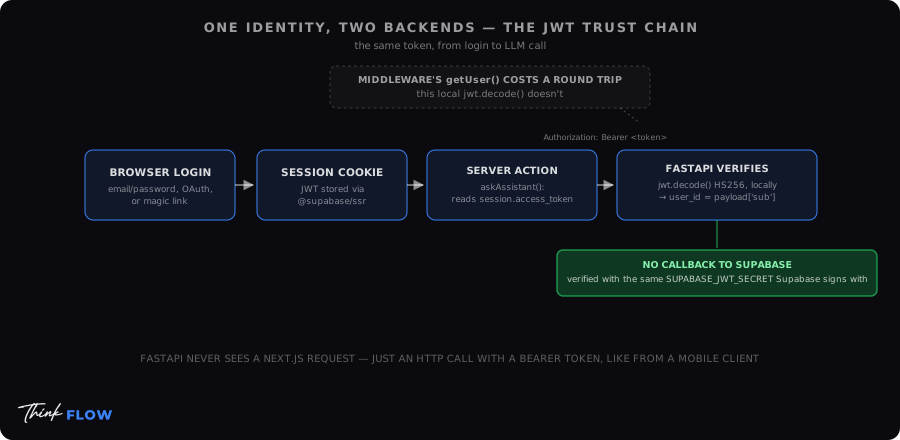
The Supabase project's JWT secret (found under Project Settings → API) is what FastAPI needs to verify tokens without calling back to Supabase on every request — the same key Supabase itself uses to sign them.
AI Integration: Calling FastAPI from Next.js Server Actions
Server Actions are the natural place to make this call — no client-side API route needed, and the Supabase session is already available server-side:
// app/actions/chat.ts
'use server'

import { createClient } from '@/lib/supabase/server'

export async function askAssistant(message: string) {
  const supabase = await createClient()
  const {
    data: { session },
  } = await supabase.auth.getSession()

  if (!session) throw new Error('Not authenticated')

  const res = await fetch(`${process.env.FASTAPI_URL}/api/ai/chat`, {
    method: 'POST',
    headers: {
      'Content-Type': 'application/json',
      Authorization: `Bearer ${session.access_token}`,
    },
    body: JSON.stringify({ message }),
  })

  if (!res.ok) throw new Error(`Backend error: ${res.status}`)
  return res.json()
}
A client component calls askAssistant(message) directly, like any other function — Next.js handles the serialization. The FastAPI backend never sees a Next.js request; it sees an HTTP call with a bearer token, same as it would from a mobile client or a cron job.
Cost: Free to Start, Predictable to Scale
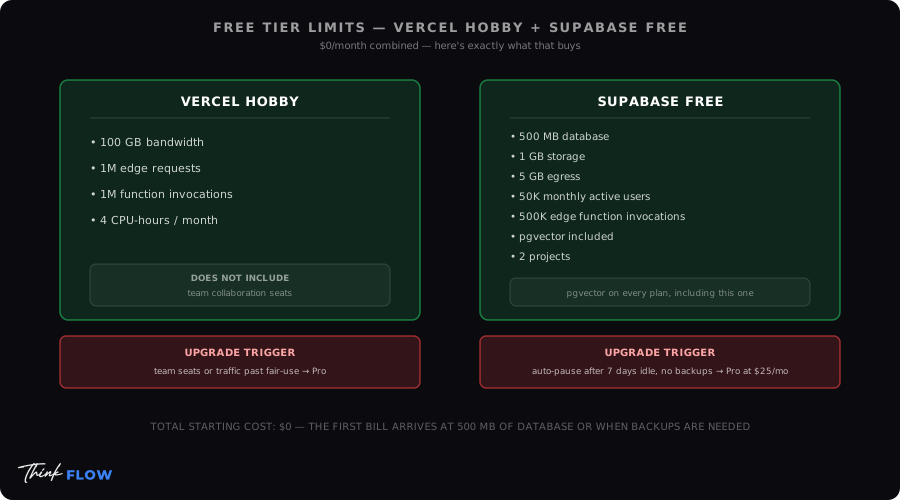
| Service | Free tier | Typical upgrade trigger | |---|---|---| | Vercel Hobby | 100 GB bandwidth, 1M edge requests, 1M function invocations, 4 CPU-hours/month | Team collaboration or traffic past Hobby's fair-use limits → Pro | | Supabase Free | 500 MB database, 1 GB storage, 5 GB egress, 50K monthly active users, 500K edge function invocations, pgvector included, 2 projects | Project auto-pause after 7 days idle, no backups → Pro at $25/month |
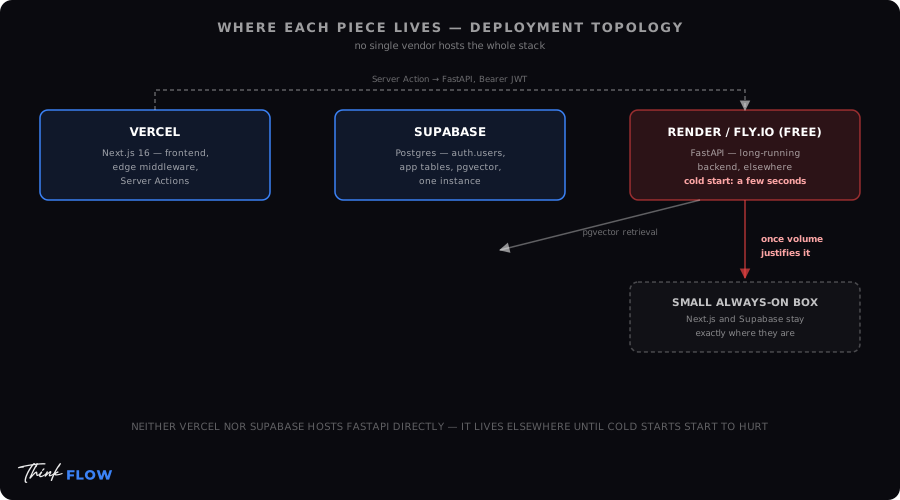
Neither Vercel nor Supabase hosts a long-running FastAPI process directly. For an early-stage app, the backend fits comfortably on a free tier elsewhere — Render's free web service or Fly.io's free allowance both handle the request volume a new product sees, accepting that a cold instance takes a few seconds to wake up. Once retrieval and generation calls are frequent enough that cold starts matter, that's the same signal used elsewhere on this site for the serverless-to-dedicated conversation: move the backend to a small always-on box once volume justifies it, and keep Next.js and Supabase exactly where they are.
The total starting cost for this stack is $0. The first real bill shows up when the Supabase project's database crosses 500 MB or the app needs backups — both comfortably past the point where a side project has already validated whether anyone wants it.
If your team needs this stack wired correctly the first time — auth, retrieval, and the backend split done right — get in touch.
Affiliate Disclosure
Some links in this article are affiliate links. If you make a purchase through them, we may receive a commission at no extra cost to you. See our full disclosure.
Daniel Burcea
AI Systems Architect. Building private AI infrastructure since 2025.Read more →